
Boarding Staff Wellbeing: Why Capability Matters as Much as Care

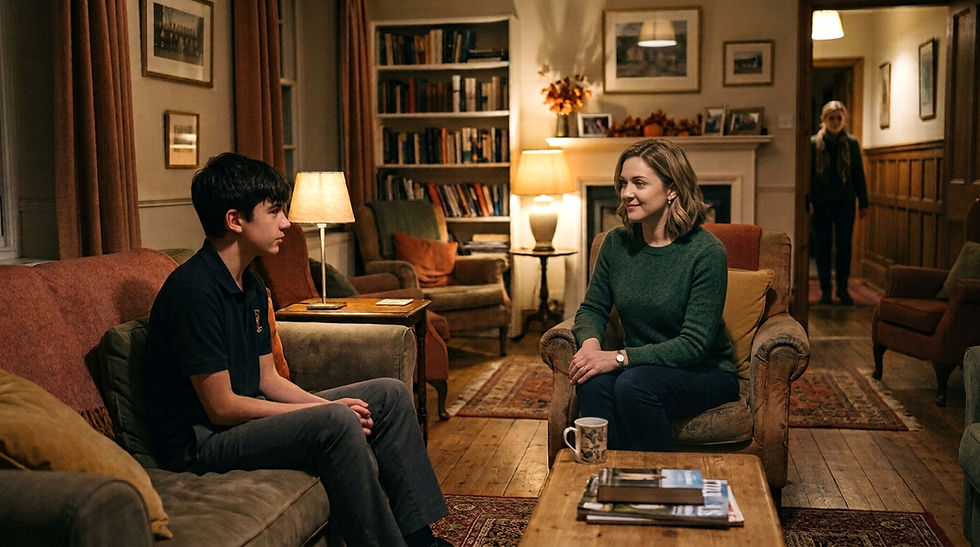
It was gone eleven at night when a houseparent once described to me the moment a fifteen year old boy knocked on her door, not because anything was wrong exactly, but because he needed to talk to someone before he could sleep. She sat with him for forty minutes. She said the right things, mostly by instinct. Then she went back to bed, alone with everything he had just handed her, and got up at six to do it all again. Nobody had ever asked her how she processes those conversations. Nobody had trained her to hold them well, or to put them down afterwards.
That story is not unusual. It is, in one form or another, most nights in most boarding schools across the country. And it points to something the sector is only beginning to talk about properly: boarding staff wellbeing is not really a question of rest, or rotas, or how many nights off someone gets, although those things matter. It is a question of whether the adults doing this work have been given the skills to do it sustainably.
What Boarding Staff Wellbeing Actually Requires
Most conversations about staff wellbeing in schools focus on reducing load: better on-call systems, protected time off, clearer boundaries between duty and downtime. These are sensible and necessary. But they treat wellbeing as something staff need protecting from the job, rather than something built through being properly equipped for it.
A houseparent who is well rested but has never been trained to manage a difficult emotional conversation, hold a boundary with warmth, or recognise their own reactivity under pressure, is still vulnerable. So is one who has excellent training but no time to use it. Genuine boarding staff wellbeing sits at the intersection of both: enough capacity to do the work, and enough skill to do it without it costing them personally every time.
This is where schools have an opportunity that goes well beyond policy. The independent boarding model, wherever it operates in the UK or across Europe, depends on staff who are essentially in loco parentis for months at a time. Treating that as a role you can simply staff, rather than a role you actively develop people for, leaves a gap that no amount of extra annual leave will close.
The Relationships at the Heart of Boarding Life
During my Master's research into what most reliably predicts a young person's enjoyment and achievement at school, one finding stood out above everything else. It was not the quality of academic provision, or the extracurricular offer, or even the pastoral structures on paper. It was the quality of relationships, and specifically the conversations and communication within them, alongside the emotional wellbeing of the adults having those conversations.
Young people thrive when they feel seen, listened to, and genuinely valued by the adults around them. That finding matters everywhere in a school. It matters most acutely in boarding, where staff are often standing in for family who are hundreds or thousands of miles away for weeks at a stretch. A boarding house is not a supervised building. At its best, it is a relationship, repeated daily, between an adult who has the capacity to be present and a young person who needs exactly that.
This is precisely why the skill of the adult matters as much as their presence. Being kind and well intentioned is the baseline. Knowing how to have the conversation that helps a homesick eleven year old feel steady again, or how to notice when a confident sixteen year old is quietly struggling, is a different and learnable skill. Coaching and positive psychology give staff a language and a framework for exactly this kind of relational work, not as an add-on to their pastoral role, but as the substance of it.
Why Supervision Belongs in Boarding
There is a second piece to this that gets far less attention, and it deserves more. In therapeutic and clinical professions, regular supervision, a protected, confidential space to reflect on difficult situations with someone trained to hold that conversation, is considered non-negotiable. In boarding, where staff absorb an equivalent amount of emotional weight on any given evening, it is often entirely absent.
The work is genuinely hard. It asks for patience at ten at night as much as at ten in the morning. It involves holding other people's distress, sometimes their crises, without a professional structure for putting it down afterwards. Without that structure, the accumulation is quiet at first and then not quiet at all: staff become depleted, then disengaged, then they leave. Recruitment and retraining in boarding is expensive and disruptive, and much of it is preventable.
Supervision is not about identifying problem staff. It is a normal, protective structure that assumes the work is demanding and gives people somewhere to process it, reflect on it, and grow from it. Schools that build this in are not fixing something broken. They are recognising, sensibly, that the emotional demands of the role are real and deserve a real response.
Building the Skills, Not Just the Support
Put together, this points towards a different model of boarding staff wellbeing than the one most schools currently have. It is less about wellbeing initiatives layered on top of an unchanged role, and more about training staff directly in the relational and reflective skills the role actually asks of them: how to have a grounding conversation with a homesick pupil, how to notice their own emotional state before it shapes how they respond, how to bring a difficult moment to supervision rather than carry it alone.
We increasingly see schools thinking about this not as a one-off training day but as an embedded coaching and supervision structure, built into the rhythm of the boarding year rather than bolted on when something has already gone wrong. It changes the experience for staff, and it changes what pupils receive from them. A boarding house staffed by adults who feel capable and supported is a fundamentally different place to live than one staffed by adults who are simply present and doing their best.
A Quiet Point of Difference for Schools
For schools thinking about how they position their boarding provision, this matters beyond staff wellbeing on its own terms. Parents choosing a boarding school are, whether they say it explicitly or not, asking who their child will be with in the evenings, and whether those adults are equipped for the responsibility they are taking on. A school that can speak confidently about how it trains, supports, and supervises its boarding staff is answering a question many families are quietly asking, without needing to say so directly.
This is not about adding another layer of provision for its own sake. It is about recognising that the emotional infrastructure around boarding, the training, the reflective support, the ongoing development, is as much a part of a school's offer as its facilities or its academic results. Schools that invest here are not simply managing a wellbeing risk. They are building something that genuinely distinguishes the experience they offer, both for the staff who choose to work there and the families who choose to send their children.
Frequently Asked Questions
What does boarding staff wellbeing actually mean in practice?
It means more than rest or time off duty. Genuine boarding staff wellbeing combines manageable workload with the relational and emotional skills staff need to handle the demands of the role sustainably, including training in conversations, boundaries, and self awareness, alongside structured reflective support.
Why is supervision important for boarding staff specifically?
Boarding staff regularly absorb emotionally demanding situations without the protected reflective space that other pastoral or clinical professions consider standard. Without supervision, this weight accumulates quietly and can lead to burnout, disengagement, and higher staff turnover, all of which are costly and disruptive for a school.
How is coaching different from counselling or therapy for boarding staff?
Coaching is forward focused and developmental. It builds skills, confidence, and self awareness for people who are functioning well but want to work more effectively and sustainably. Counselling and therapy address diagnosable difficulties. Boarding staff generally benefit most from coaching and supervision as ongoing professional development, with therapeutic support available separately where genuinely needed.
What can schools do to improve wellbeing for boarding and pastoral staff?
Beyond fair scheduling and clear boundaries, the most effective, forward-thinking schools are building in structured training in relational and emotional skills, alongside regular supervision, so that staff are equipped for the emotional demands of the role rather than simply given time to recover from them.
Does this apply to international and European boarding schools too?
Yes. The pressures of boarding, staff standing in for family, emotionally demanding daily contact, and the risk of burnout without reflective support, are consistent across boarding models in the UK and across Europe. The specific context varies, but the underlying need for trained, supported staff does not.
If you are a head, head of boarding, or pastoral lead thinking about how to build genuine capability and support into your boarding staff structure, we would love to talk it through. Book a free twenty minute discovery call at keystonecoaching.co.uk and let us help you think about what this could look like for your school.


Comments